Hannah Baker
Thirteen Reasons WhyHannah Baker is the dead girl whose recorded account becomes the central narrative force of the novel: she explains why her life ended, identifies the people connected to her story, and insists that each listener take a turn in receiving it. Her tapes make a posthumous record of both deliberate storytelling and repeatedly missed signals. Across that record, the decisive pattern is not that Hannah never communicated, but that disclosures, gestures, and requests for help did not become effective intervention in time.
Identity and the Tapes
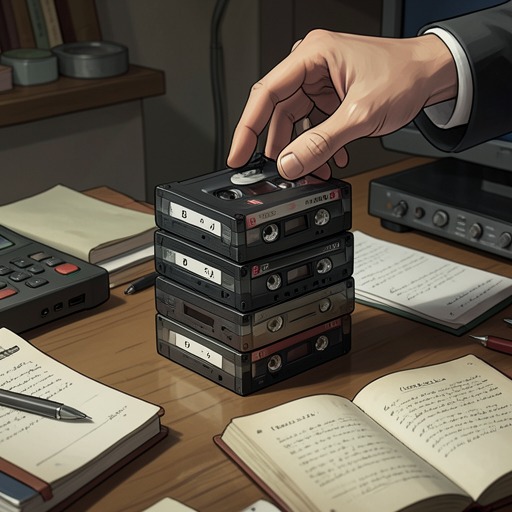
Before her death, Hannah records thirteen sides and sends them through a chain of listeners. She frames the recordings as an account of her life and, more specifically, of why it ended, telling each recipient that they are one of the reasons she is speaking. She withholds the order in which any individual listener enters the story, while promising that the recipient’s name will appear. That structure makes her both narrator and organizer: she controls when the story is heard and directs listeners to discover their place within it.
The instructions are starkly simple: listen, then pass the tapes on. After all thirteen sides, the recipient must rewind them, return them to their box, and deliver them to the next person. Hannah adds a threat to the final listener, who may take the tapes “straight to hell,” and says she has made a copy that will be released publicly if the package fails to reach everyone. The safeguard makes the sequence more than a private confession: Hannah anticipates that some listeners may refuse their assigned part and builds a consequence into the chain. The rules ensure that her account moves forward, even though they cannot ensure that its listeners will understand or respond as she hoped.
Suicidal Thoughts and the Missed Note
Hannah recalls that, while sitting at a table and stirring, the worst thoughts she had ever known first entered her mind. At first she cannot bring herself to say the word for what she was considering. She addresses Zach directly, acknowledging that he tried to rescue her, but distinguishes that attempt from the reason he appears on the tapes. Her question about why someone would later throw a failed rescue back in her face gives the episode two parts: an effort to help, and a painful aftermath in which that effort becomes a reproach.
At school, Mrs. Bradley keeps a paper bag on the spinning bookrack for students’ comments about her teaching and suggestions for discussion topics. Hannah writes a note proposing the subject of suicide and disclosing that she has been thinking about it, though not too seriously. She drafts it dozens of times, discarding and crumpling earlier versions before delivering the final note. The repeated attempts establish that the disclosure is difficult for her to make; the note is not an offhand suggestion, but a carefully prepared signal placed in a channel the teacher has invited students to use.
Mrs. Bradley has previously accepted anonymous topics on abortion, family violence, and cheating, but the class does not begin a thorough discussion of suicide. Instead, students insist on specifics. Mrs. Bradley spends about ten minutes presenting local statistics and explains that deaths by suicide among juveniles may not be reported in the news when they occur outside a public place with witnesses; families may describe them as accidents, leaving communities unaware of what is happening. The information opens a view of how suicide can be hidden, but it does not produce the sustained classroom discussion Hannah’s note might have prompted. Hannah remains uncertain whether the students are merely curious or believe specific details are necessary to help. In the episode, a public conversation about a life-threatening subject becomes detached from the individual who has quietly named it as personal.
The Poem and the Desire to Be Seen
Hannah’s poem “Soul Alone” gives poetic form to her sense of being unseen, including within her family. Its speaker asks another person to look beyond clothing and outward appearance, to recognize a soul rather than merely see a body. The poem also turns to the speaker’s mother, who carried her but now sees only what she wears, and to the hope that people asked how she is doing will not stop at a polite smile and nod. The poem’s repeated appeal is for attention that goes beyond appearances into knowledge of the person beneath them.
When Mr. Porter distributes the poem at school, he describes reading a poem by an unknown student as like reading a classic poem by a dead poet: neither author is present to explain its true meaning. He waits for its writer to identify themself, but no one does. Hannah later supplies the missing attribution by naming the poem as her own. Some students had apparently suspected this; after Ryan’s collection brought the poem into the curriculum, people confronted Hannah, but she neither confirmed nor denied authorship, angering some of them. The classroom’s uncertainty about who wrote the poem echoes its subject: Hannah’s words are present and discussed, while Hannah herself remains unrecognized as their source.
Warning Signs and the Attempt to Ask for Help
Hannah’s account presents warning signs in different forms rather than as one isolated declaration. She first describes the arrival of thoughts of suicide at the table; she later leaves a carefully worded note in the classroom suggestion bag. Still later, as her decision hardens, she settles on pills as the means and says she has little time left to decide how many because she intends to act the next day. The progression from thoughts, to disclosure, to a contemplated method and near-term timetable makes the worsening crisis explicit without reducing it to a single cause.
There is also a consequential gesture of giving away property. Hannah brings Tony her bicycle and says she is finished with it; when he asks why, she shrugs and has no stated reason. Tony understands the gift afterward as a sign he missed. His remembered explanation is practical and particular: Hannah says he is the only person she can think of who might need it, since he drives the oldest car at school and could use a backup if it broke down. The ordinary usefulness of that explanation sits beside its later significance. The bicycle is both a plausible gift and a warning that becomes legible to Tony only in retrospect.
In her final appeal to Mr. Porter, Hannah says she is giving life one more chance and is asking for help because she cannot do this alone. She also recognizes that the recording’s existence may mean the attempt has failed, and says that if he fails, the deal is sealed. The statement holds hope and foreknowledge together: she is not describing help as unnecessary, but making one last attempt to obtain it while anticipating that it may not arrive in time.
Final Conversation and Narrative Significance
The account of Hannah’s meeting with Mr. Porter sharpens the difference between hearing words and recognizing their urgency. She says that she needs everything to stop—people and life—and pushes herself back from the slide. Mr. Porter repeats her statement and asks whether she means her own life. Hannah’s recorded narration then supplies the interpretation that the conversation itself does not secure: she wants him to notice what she has said and help her. The scene makes the request unmistakable to listeners of the tape, even as its placement in Hannah’s posthumous narrative shows that the opportunity to answer it belonged to an earlier moment.
Taken together, the classroom note, the poem, the bicycle, and the meeting with Mr. Porter form a record of signals whose significance is either missed or understood too late. Hannah’s tapes give those moments a sequence and an audience, but their strict passing-on rule cannot reverse what happened. The novel’s portrayal of her therefore holds two facts in tension: she constructs an exacting account that makes others listen, and the events she recounts show how inadequate listening can be when attention does not turn into direct, timely support.